Lilium superbum (IXc/d)
Turk's cap lily
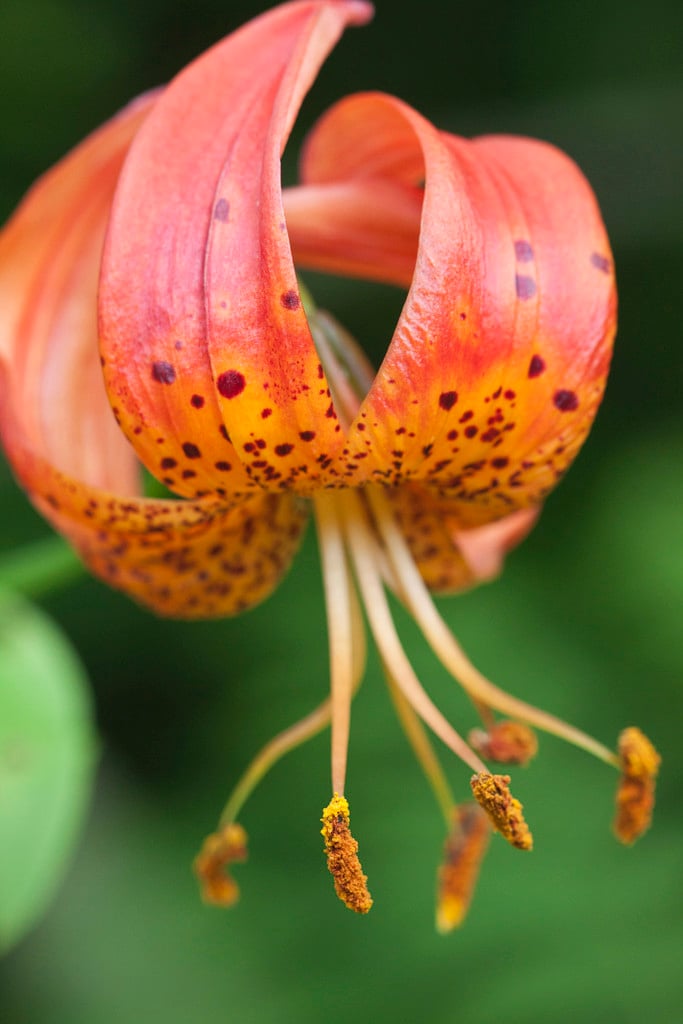
A vigorous stem-rooting lily with purple-mottled green stems and linear bright green leaves; in late summer and early autumn it produces long racemes of up to 40 pendent turkscap flowers, to 7cm across, with red-flushed orange tepals, green towards the bases and spotted maroon
Buy this plant
Size
Ultimate height
1.5–2.5 metresTime to ultimate height
2–5 yearsUltimate spread
0.5–1 metresGrowing conditions
Moisture
°Â±ð±ô±ô–d°ù²¹¾±²Ô±ð»åpH
Acid, NeutralColour & scent
| Stem | Flower | Foliage | Fruit | |
| Spring | Green | |||
|---|---|---|---|---|
| Summer | Orange Purple Red | Green | ||
| Autumn | ||||
| Winter |
Position
- Full sun
- Partial shade
Aspect
South–facing or West–facing or ·¡²¹²õ³Ù–f²¹³¦¾±²Ô²µ
Exposure
Exposed or Sheltered Hardiness
H6Botanical details
- Family
- Liliaceae
- Native to GB / Ireland
- No
- Foliage
- Deciduous
- Habit
- Columnar upright
- Potentially harmful
- Ornamental bulbs - not to be eaten. Wear gloves and other protective equipment when handling. TOXIC to pets if eaten (cats) - see the HTA guide to potentially harmful plants for further information and useful contact numbers
- Genus
Lilium are bulbous perennials with erect stems bearing whorled or spirally arranged leaves and terminal racemes or umbels of bowl-shaped, trumpet-shaped, funnel-shaped or turks cap shaped flowers, often fragrant, and white, yellow, orange or red
- Name status
Correct
- Horticultural Group
- These include lily species and cultivars of lily species with downward-facing flowers
- Plant range
- E United States
How to grow
Cultivation
Grow in neutral to acid well-drained soil enriched with leaf mould or well-rotted organic matter
Propagation
Propagate by seed, sown, when ripe, in containers in a cold frame or separate offsets after the foliage dies down
Suggested planting locations and garden types
- Patio and container plants
- City and courtyard gardens
- Coastal
- Wildflower meadow
- Cut flowers
- Flower borders and beds
- Wall side borders
Pruning
No pruning required
Pests
May be susceptible to lily beetle, aphids, slugs, snails, Thrips, leatherjackets, and wireworms, and to damage by rabbits and voles; plants in containers may be susceptible to vine weevil
Diseases
Grey moulds and a virus may cause problems, see lily diseases
¶¶ÒõÊÓƵ
¶¶ÒõÊÓƵ is the UK’s leading gardening charity. We aim to enrich everyone’s life through plants, and make the UK a greener and more beautiful place.