Neillia thibetica
Tibetan neillia
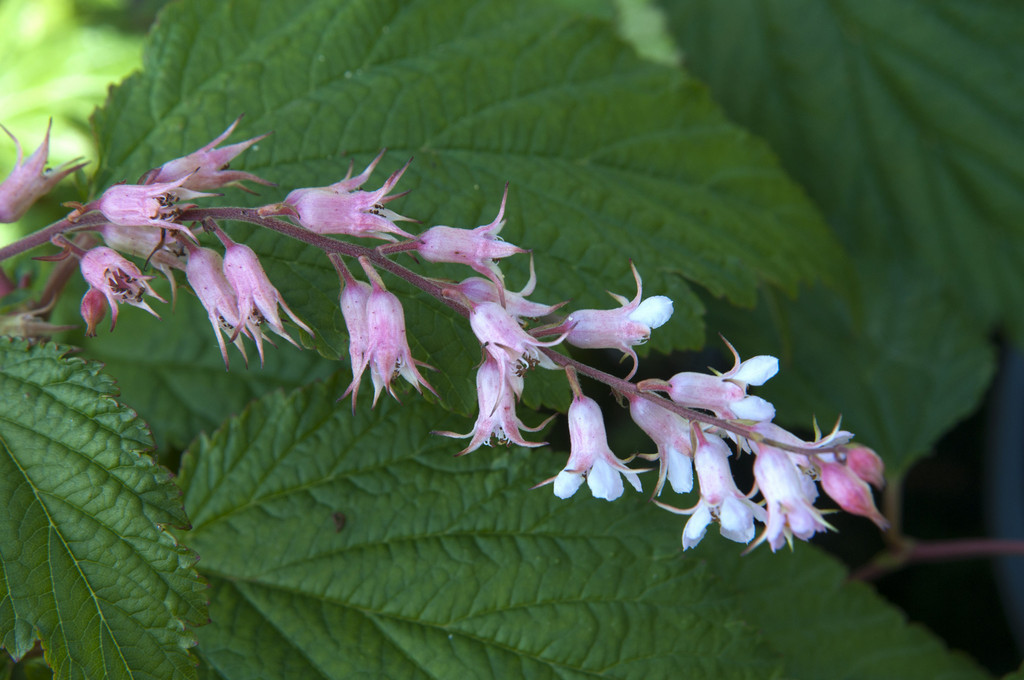
A thicket-forming, suckering, deciduous shrub with arching branches and bright green, three-lobed leaves. In early summer small, bell-shaped, rose-pink flowers are produced in sprays up to 15cm long
Buy this plant
Size
Ultimate height
1.5–2.5 metresTime to ultimate height
2–5 yearsUltimate spread
1.5–2.5 metresGrowing conditions
Moisture
°Â±ð±ô±ô–d°ù²¹¾±²Ô±ð»åpH
Acid, Alkaline, NeutralColour & scent
| Stem | Flower | Foliage | Fruit | |
| Spring | Green | |||
|---|---|---|---|---|
| Summer | Pink | Green | ||
| Autumn | Green | |||
| Winter |
Position
- Full sun
- Partial shade
Aspect
North–facing or South–facing or West–facing or ·¡²¹²õ³Ù–f²¹³¦¾±²Ô²µ
Exposure
Exposed or Sheltered Hardiness
H7Botanical details
- Family
- Rosaceae
- Native to GB / Ireland
- No
- Foliage
- Deciduous
- Habit
- Suckering
- Genus
Neillia are deciduous shrubs and subshrubs with lobed leaves carried on graceful, arching branches. Profuse sprays of small flowers appear in late spring and early summer
- Name status
Correct
- Plant range
- W China (Sichuan, Yunnan)
How to grow
Cultivation
Grow in fertile, well-drained soil in sun or semi-shade
Propagation
Propagate by softwood cuttings in early summer or by removing suckers
Suggested planting locations and garden types
- Cottage and informal garden
- Low Maintenance
- Banks and slopes
Pruning
Pruning group 2 after flowering
Pests
Generally pest-free
Diseases
Generally disease-free
¶¶ÒõÊÓƵ
¶¶ÒõÊÓƵ is the UK’s leading gardening charity. We aim to enrich everyone’s life through plants, and make the UK a greener and more beautiful place.