Not the plant you're looking for? Search over 300,000 plants
Bulbs

Size
Ultimate height
0.1–0.5 metresTime to ultimate height
2–5 yearsUltimate spread
0.1–0.5 metresGrowing conditions
Loam
Sand
Moisture
°Â±ð±ô±ô–d°ù²¹¾±²Ô±ð»åpH
Acid, Alkaline, NeutralColour & scent
| Stem | Flower | Foliage | Fruit | |
| Spring | Grey Silver Green | |||
|---|---|---|---|---|
| Summer | Purple | Grey Silver Green | ||
| Autumn | Purple | Grey Silver Green | ||
| Winter |
Position
- Full sun
Aspect
East–facing or South–facing or °Â±ð²õ³Ù–f²¹³¦¾±²Ô²µ
Exposure
Sheltered Hardiness
H3Botanical details
- Family
- Amaryllidaceae
- Native to GB / Ireland
- No
- Foliage
- Deciduous
- Habit
- Tufted
- Genus
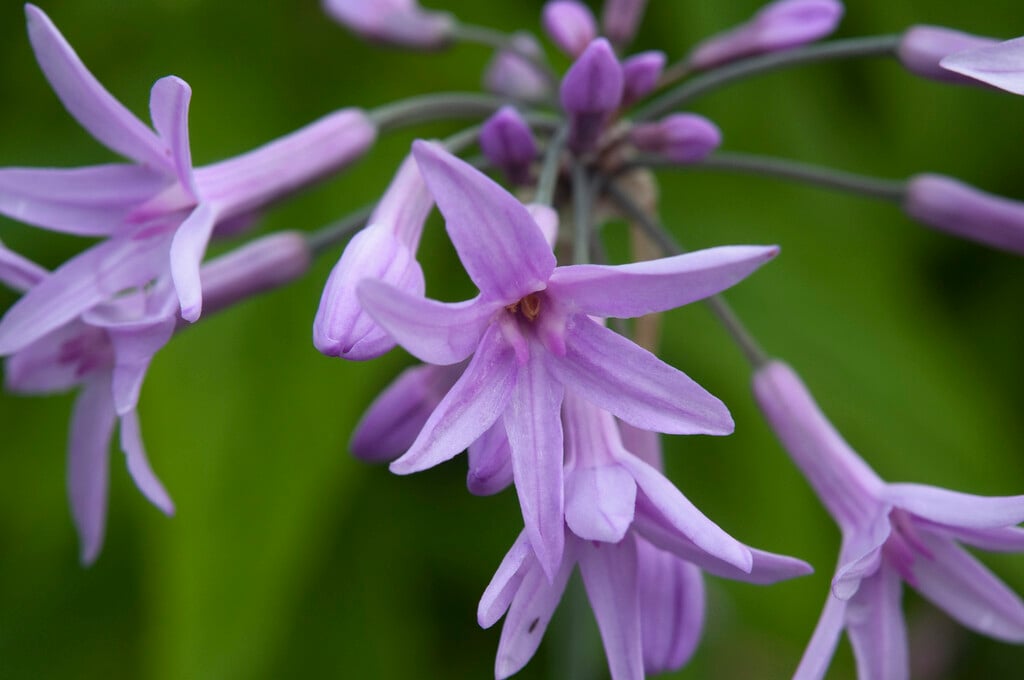
Tulbaghia are bulbous or rhizomatous perennials with linear, onion-scented leaves and umbels of small, star-shaped flowers with a small cup-like corona
- Name status
Correct
- Plant range
- South Africa
How to grow
Cultivation
Grows well in any moderately fertile, well-drained, loamy soil. Protect in all but the mildest areas over winter with a deep dry mulch or bring container grown plants into an unheated greenhouse
Propagation
Propagate by seed, sown when ripe, in containers in a cold frame or division in spring
Suggested planting locations and garden types
- Mediterranean climate plants
- City and courtyard gardens
- Cottage and informal garden
- Rock garden
- Flower borders and beds
Pruning
No pruning required
Pests
Generally pest-free
Diseases
Generally disease-free

Tulbaghia violacea
society garlic
at the RHS plant Shop
¶¶ÒõÊÓƵ
¶¶ÒõÊÓƵ is the UK’s leading gardening charity. We aim to enrich everyone’s life through plants, and make the UK a greener and more beautiful place.