Eucryphia milliganii
dwarf leatherwood
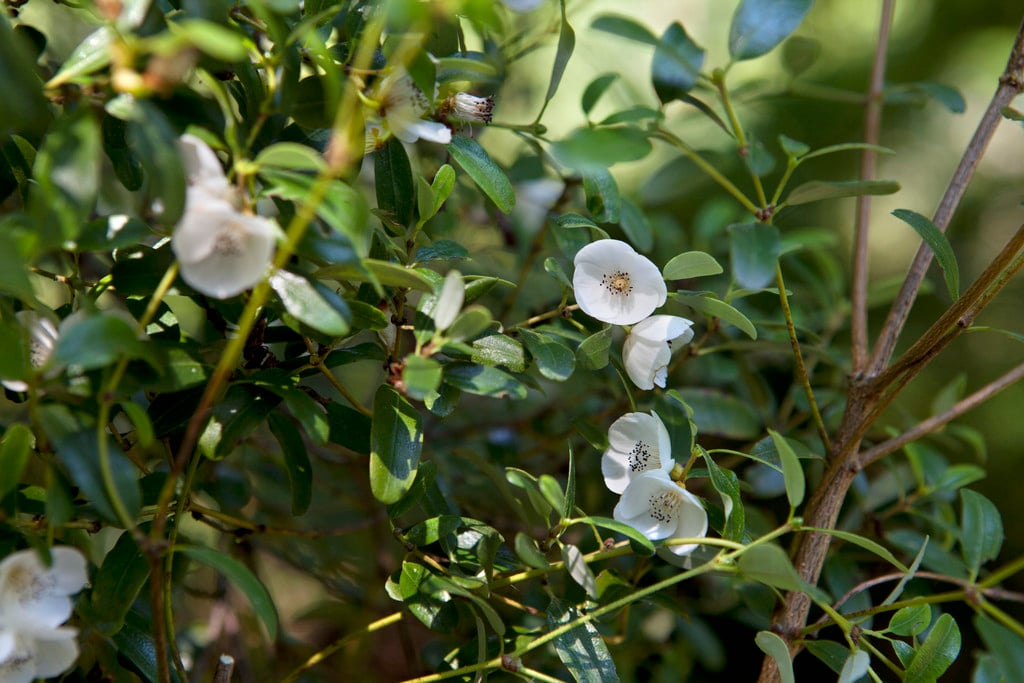
A slender, narrowly-columnar evergreen shrub or small tree, up to 6m high, with sticky buds and simple, oblong, glossy dark green leaves, up to 1.5-2cm long, and glaucous below. Scented white flowers, 2-2.5cm across, appear in midsummer; it flowers from an early age
Size
Ultimate height
4–8 metresTime to ultimate height
10–20 yearsUltimate spread
1–1.5 metresGrowing conditions
Moisture
Moist but well–drainedpH
Acid, NeutralColour & scent
| Stem | Flower | Foliage | Fruit | |
| Spring | Green Blue | |||
|---|---|---|---|---|
| Summer | White | Green Blue | ||
| Autumn | Green Blue | |||
| Winter | Green Blue |
Position
- Full sun
Aspect
South–facing or °Â±ð²õ³Ù–f²¹³¦¾±²Ô²µ
Exposure
Sheltered Hardiness
H4Botanical details
- Family
- Cunoniaceae
- Native to GB / Ireland
- No
- Foliage
- Evergreen
- Habit
- Columnar upright
- Genus
Eucryphia can be evergreen or deciduous shrubs or trees, with simple or pinnate leaves and solitary bowl-shaped white flowers in the leaf axils in summer or autumn
- Name status
Correct
- Plant range
- Australia (Tasmania)
How to grow
Cultivation
Grow in a position sheltered from cold, drying winds and in full sun, but with the roots in shade in fertile, humus-rich, moist but well-drained soil which is neutral or acidic
Propagation
Propagate by seed, sown as soon as ripe in late winter in containers in a cold frame, or by semi-ripe cuttings in summer, and overwinter young plants in a cool greenhouse
Suggested planting locations and garden types
- City and courtyard gardens
- Coastal
- Cottage and informal garden
- Low Maintenance
- Hedging and screens
- Wall side borders
Pruning
Pests
Generally pest-free
Diseases
May be susceptible to honey fungus
¶¶ÒõÊÓƵ
¶¶ÒõÊÓƵ is the UK’s leading gardening charity. We aim to enrich everyone’s life through plants, and make the UK a greener and more beautiful place.